Nowadays people have busy lifestyles with very less or no time to spare for things like maintaining a garden or for that matter the grass of the garden. That’s why artificial grass is becoming very popular for residential lawns. It does not mean that natural turf has lost its charm.
If you are planning to build a beautiful garden for your home but are confused between which type of grass will suit your garden, this blog is going to be a very helpful experience for you. We will discuss both natural and artificial grass, what is the difference between them, and why you should choose our Garden Maintenance services at DSK Garden & Landscape.
What Is Natural Turf?
Natural turf is basically real, living grass that grows out of the soil in your garden. It’s the same turf grass that has been used in homes, parks, and gardens for centuries. It needs sunlight, water, soil nutrients, and regular care to stay green and healthy. If you love the feel of real grass under your feet and enjoy spending weekends in the garden, natural turf might be your thing. It’s a core part of traditional residential landscaping and gives your home that classic, earthy look.
What Is Artificial Grass?
Artificial grass, also known as synthetic turf, is a man-made carpet-like material designed to look and feel like real grass. It’s made from synthetic fibers and doesn’t need soil, water, or sunlight to survive. You just lay it down over a prepared base and it stays green all year round, no matter the season. For people with busy schedules or those tired of mowing every weekend, artificial grass has become a go-to option for modern homes and low-maintenance gardens.
Difference Between Natural Turf And Artificial Grass
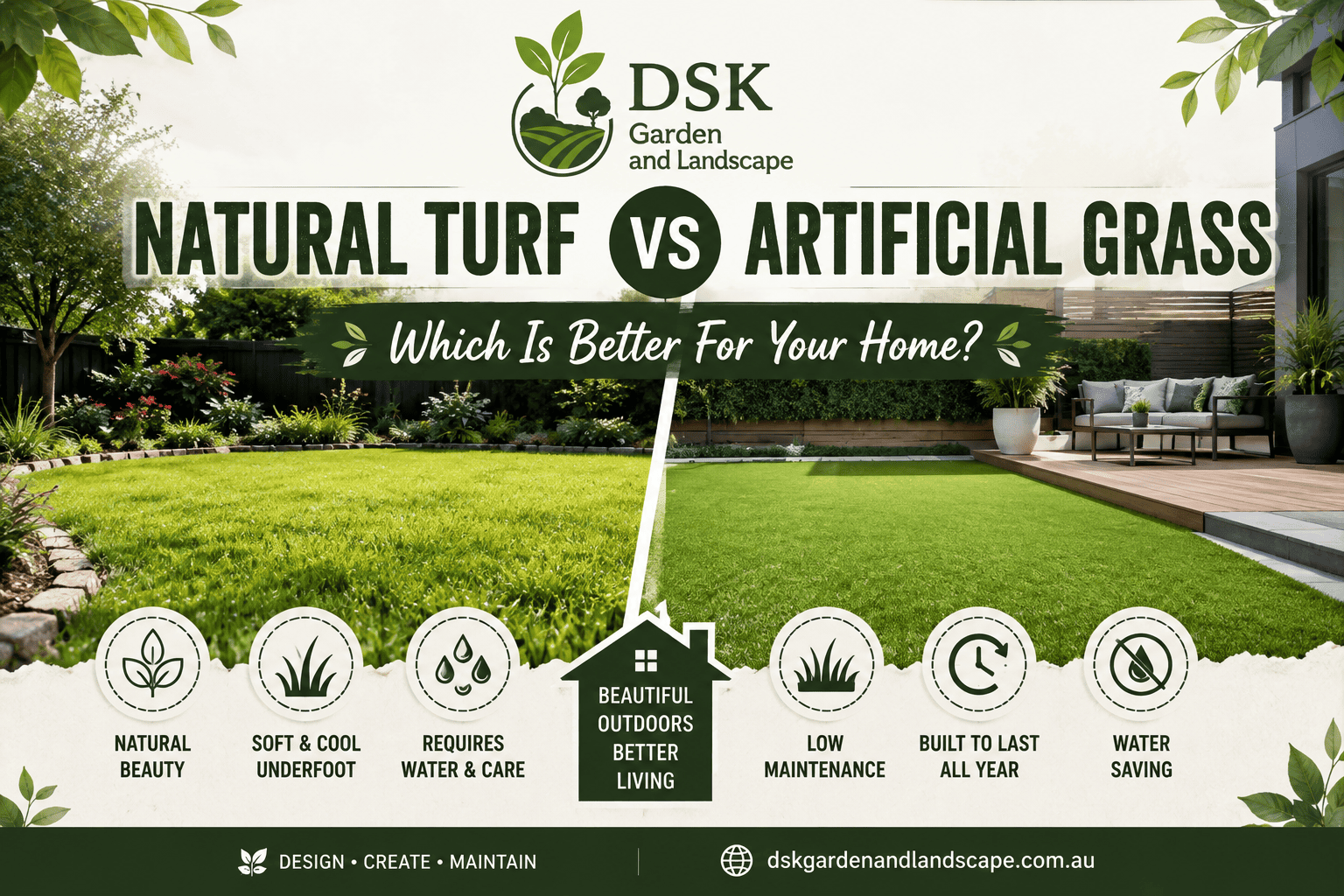
When it comes to natural turf vs artificial grass for home decisions, most people struggle because both have their own charm and drawbacks. Here’s a simple comparison to make it easier for you:
| Factor | Natural Turf | Artificial Grass |
| Maintenance | Needs regular lawn maintenance like mowing, watering, weeding, and fertilizing | Almost zero maintenance once installed |
| Appearance | Changes colour with seasons and can get patchy | Stays green all year round |
| Cost | Lower installation cost, but ongoing expenses add up | Higher upfront cost, but saves money over time |
| Water Usage | Requires regular watering | Doesn’t need watering at all |
| Feel | Soft, natural feel under bare feet | Feels good too, but can heat up in direct sun |
| Environment | Absorbs CO2 and supports soil health | Doesn’t offer the same environmental benefits |
| Lifespan | Depends on care and weather conditions | Long-lasting with minimal wear and tear |
Advantages And Disadvantages Of Natural Turf
Natural turf has its own set of pros and cons that you should weigh before deciding.
Advantages:
- Natural turf feels soft and pleasant under bare feet, giving your garden that authentic, homely touch.
- It helps cool down the surrounding area naturally, making your outdoor space more comfortable during hot days.
- It’s good for the environment as it absorbs CO2 and supports the health of the soil underneath it.
- It adds real, timeless value and charm to your lawn & garden spaces that’s hard to replicate.
Disadvantages:
- Natural turf needs regular watering, mowing, and fertilizing to stay healthy and green throughout the year.
- It can develop patches, weeds, or pest issues if not looked after consistently.
- The maintenance costs can add up over time because you have to maintain it from time-to-time
- It’s not ideal for homes in areas facing water shortages or extreme weather conditions.
Advantages And Disadvantages Of Artificial Grass
Artificial grass is a newer option but it’s not without any disadvantages:
Advantages:
- Artificial grass requires zero mowing, watering, or fertilizing, saving you a lot of time and effort every week.
- It stays green and neat throughout the year, regardless of the season or weather.
- It’s great for pets and kids since there’s no mud, muck, or pollen allergies to worry about.
- It helps you save a lot on water bills and long-term maintenance costs compared to natural grass.
Disadvantages:
- Artificial grass can get quite hot under direct sunlight, especially during peak summer afternoons.
- It usually comes with a higher upfront installation cost compared to natural grass.
- It doesn’t offer the same environmental benefits as real grass, since it isn’t a living plant.
- It may need occasional cleaning to remove dust, debris, or pet waste from the surface.
Which One Should You Choose?
Honestly, there’s no one-size-fits-all answer to natural turf vs artificial grass which is better, it depends on your lifestyle. If you enjoy gardening, have time on your hands, and love the natural feel of grass, go for natural turf. But if you have a busy routine, want a low-maintenance garden, or live in an area with water restrictions, artificial grass makes more sense. Many homeowners today are also going for a mix, using artificial grass in high-traffic areas and natural turf in decorative garden patches for the best of both worlds.
FAQ’s
A. Yes, it can get warmer than natural grass in direct sun, especially in peak summer.
A. Yes, ongoing water and maintenance costs usually make natural turf pricier over time.
A. Not directly, the old grass and topsoil need to be removed and a base prepared first.
A. Not anymore, modern artificial grass looks quite realistic compared to older versions.
Conclusion
Both natural turf and artificial grass have their own strengths, and the right choice really comes down to how much time you can give to your garden and what look you’re going for. And if you are looking for Graden maintenance near me then we at DSK Garden & Landscape is your best choice. Contact us today.